National Crash
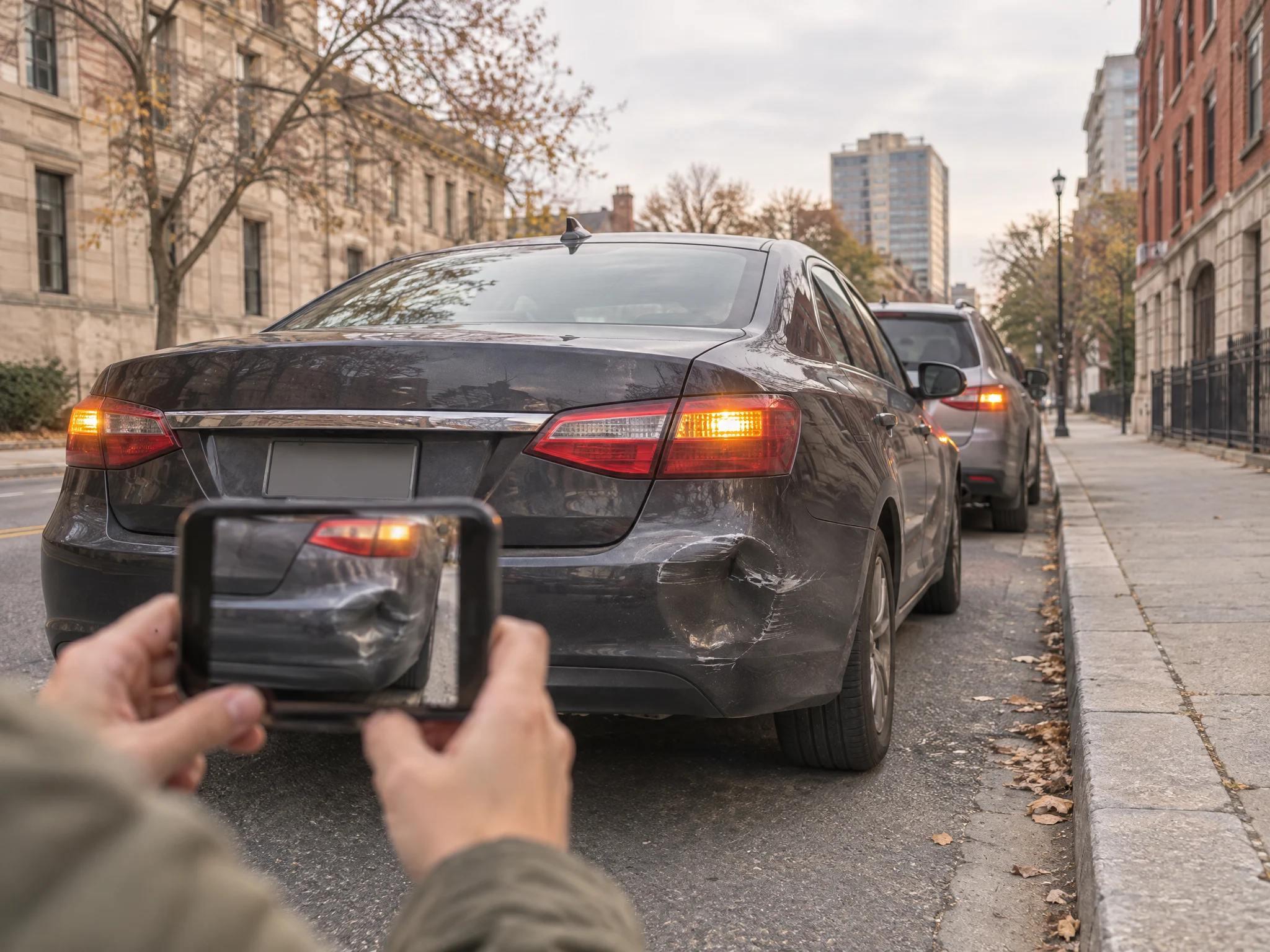
A driver photographs the dented bumper of a car pulled over with its hazard lights on

What to do after a car accident

The do's and don'ts that protect your health and your claim.

The do's and don'ts.

What to do, and what to avoid, from the moment of the crash until your claim is settled.

At the scene

The first hour shapes your safety and your claim.

Do

  • Check for injuries and call 911

    Get help for anyone who is hurt, including you. Ask for police to come, even if the crash seems minor.

  • Get out of traffic if you can

    Turn on your hazard lights. If the cars can move and no one is hurt, pull to the shoulder or a safe spot nearby.

  • Swap information

    Get the other driver's name, phone, license, plate, insurer and policy number. Write down the car's make and color.

  • Photograph everything

    Shoot every car from several angles, the damage up close, the road, signs, skid marks, the weather and any injuries.

  • Find witnesses

    Ask anyone who saw the crash for their name and number. A neutral witness can settle a fault dispute.

Don't

  • Don't leave the scene

    Leaving before you exchange information or help someone injured can be a crime. Wait for police if they're coming.

  • Don't admit fault

    Skip "I'm sorry" or "I didn't see you." Stick to the facts. Fault is decided later, from the evidence.

  • Don't argue with the other driver

    Keep it calm and short. Anything you say can end up in a police or insurance report.

  • Don't settle it with cash

    A handshake deal can leave you paying for damage or injuries that show up later.

In the first few days

What you do this week is what an insurer will look at first.

Do

  • See a doctor right away

    Go the same day if you can. Some injuries take days to show, and care on day one ties them to the crash.

  • Get the police report

    Ask for the report number at the scene, then request a copy. It helps show what happened and who was involved.

  • Tell your own insurer

    Your policy likely requires prompt notice. Give the basic facts: when, where and who was involved.

  • Check your state's reporting rule

    Some states also require you to report a crash to the DMV. Your state's page lists its rules.

Don't

  • Don't skip or delay care

    Insurers often point to a gap in treatment to argue an injury is minor or came from something else.

  • Don't give a recorded statement

    The other driver's insurer may call fast. You don't have to talk to them before you understand your rights.

  • Don't post about the crash

    Photos and comments on social media can be used to question your injuries or your account.

  • Don't repair your car yet

    Let the insurer inspect it, or photograph it fully, before anything is fixed or the car is scrapped.

While your claim is open

Claims take time. A few habits keep yours strong.

Do

  • Follow your treatment plan

    Go to every appointment and keep notes on pain, sleep and what you can't do.

  • Save every record

    Keep medical bills, receipts, repair estimates, pay stubs and every letter from an insurer in one folder.

  • Track missed work

    Note each day off, each shift lost and any change to what you can do at work.

  • Know your deadline

    Every state sets a deadline to file an injury lawsuit. Miss it, and the claim is usually gone.

Don't

  • Don't take the first offer

    Early offers often come before you know the full cost of your injuries. Once you accept, it's usually final.

  • Don't sign a release too soon

    Read anything an insurer sends before you sign it. A release can end your claim for good.

  • Don't wait to get advice

    A lawyer licensed in your state can explain your options and your deadline before you decide.

Keep it all in one folder.

A complete file makes your claim easier to prove. Start it the day of the crash.

My crash file

  • Police reportThe report number and a copy
  • Photos and videoFrom the scene and of your injuries as they heal
  • Other driver's detailsName, plate, insurer and policy number
  • Medical records and billsEvery visit, prescription and receipt
  • Proof of missed workPay stubs and a note from your employer
  • Insurance lettersEvery letter, email and claim number
  • Repair estimatesQuotes, invoices and rental car costs

Your state sets the clock.

Fault rules, insurance minimums and the deadline to file all depend on where the crash happened.

Shortest filing deadline
1 year
Tennessee
Longest filing deadline
6 years
Maine, Minnesota, North Dakota

Frequently asked questions.

Should I call the police after a minor crash?
Usually, yes. A police report is a neutral record of what happened and who was involved, and some states require a report when there are injuries or damage above a set amount.
What if I feel fine after the crash?
See a doctor anyway. Some injuries, like whiplash or a concussion, can take days to show. Care soon after the crash also ties your injuries to it.
Do I have to talk to the other driver's insurance company?
You should report the crash to your own insurer. You generally don't have to give the other driver's insurer a recorded statement, and it's wise to understand your rights before you do.
How long do I have to file a claim?
It depends on your state. Every state sets a deadline to file an injury lawsuit, and exceptions apply, such as claims against a government agency. Check your state's page and confirm with a lawyer if time is short.

See what your case could be worth.

Answer a few questions by voice or a short form. It takes about 2 minutes.